Have you ever opened Instagram, Snapchat, or a group chat and seen someone comment TFTI after friends posted pictures from a party or outing?
If you were not familiar with internet slang, those four letters might seem confusing. In most online conversations, TFTI means Thanks For The Invite.
However, the phrase often does not express genuine gratitude. Instead, it is commonly used sarcastically when someone wants to point out that they were left out of plans.
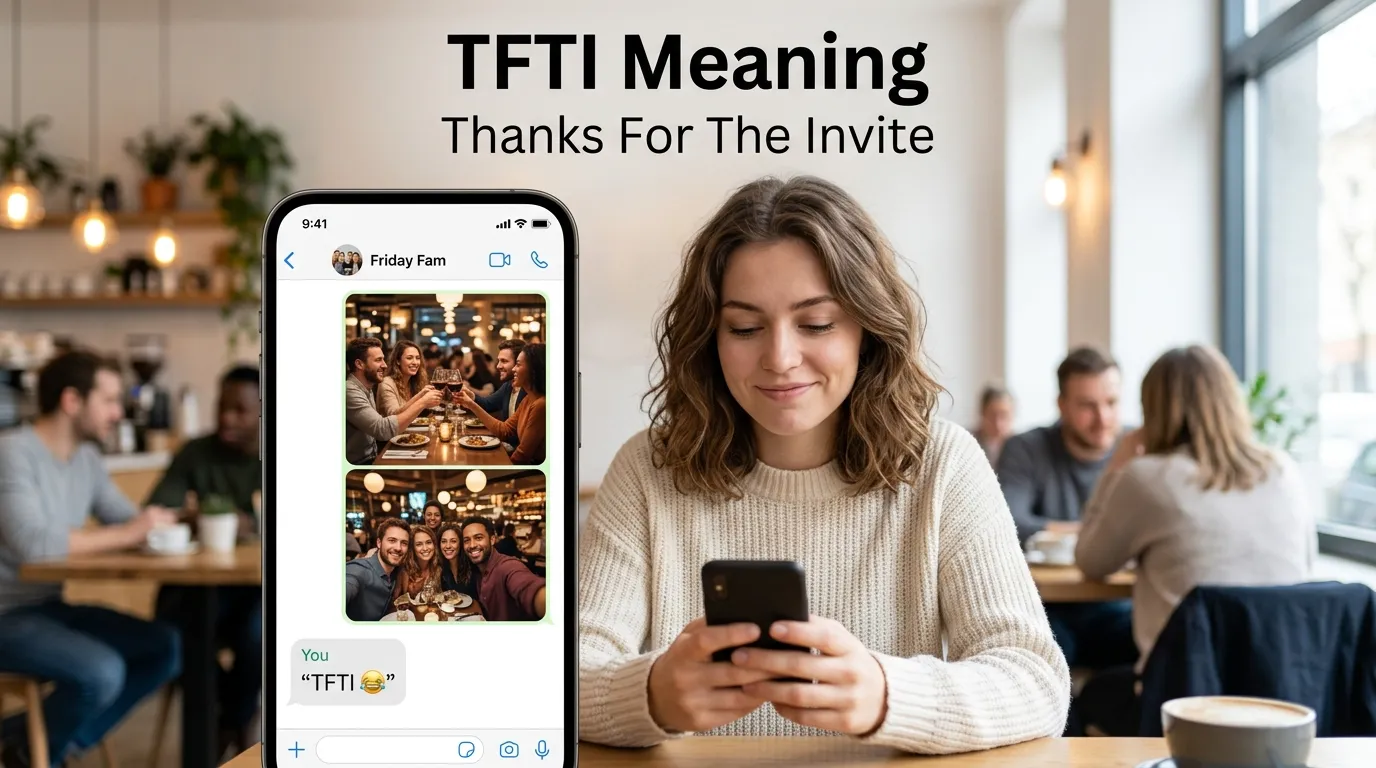
For example, if three friends go to dinner and post a group picture without inviting another friend, that person might comment, TFTI! The message can jokingly mean,
“Thanks for the invite,” even though no invitation was actually given. This sarcastic use is widely documented in texting and social-media slang references.
Still, context matters. TFTI can also mean “Thanks For The Information” in some conversations, although “Thanks For The Invite” is generally the more common texting meaning.
This guide explains what TFTI means, where it came from, how people use it on social media, its tone, examples, related slang, and how to respond when someone sends you TFTI.
What Does TFTI Mean?
TFTI usually stands for Thanks For The Invite.
It is an informal acronym used in digital communication, especially when someone feels they were excluded from a social activity. The phrase is often sarcastic rather than sincere.
TFTI Meaning in Simple Words
In simple terms:
TFTI = Thanks For The Invite
When used sarcastically, it really means something like:
- “I see you all went without me.”
- “Nice of you to include me.”
- “I wish I had been invited.”
- “I noticed I was left out.”
- “Looks like everyone had fun without me.”
The exact feeling depends on the relationship and context. Between close friends, TFTI can be harmless teasing. Between people who are already annoyed with each other, it can sound passive-aggressive.
TFTI Meaning in Text
In text messages, TFTI is usually a quick way to react when someone mentions or shows an activity you were not invited to.
For example:
Friend: We went bowling last night.
You: TFTI 😂
Here, you probably are not seriously thanking them. You are joking about being left out.
Another example:
Friend: Everyone met at Sarah’s house yesterday.
You: Oh wow, TFTI 😭
The emoji helps communicate that the message is playful rather than genuinely angry.
Texting references generally identify Thanks For The Invite as the primary meaning of TFTI.
TFTI Meaning on Social Media
TFTI is particularly useful on social media because people can easily discover activities they were not told about.
A friend may upload:
- Party pictures
- Restaurant photos
- Vacation pictures
- Concert videos
- Group selfies
- Birthday celebrations
- Weekend activities
Someone who was not invited may respond with:
TFTI!
The comment draws attention to their absence while often keeping the mood humorous.
Social-media slang references commonly describe TFTI as a sarcastic response to being excluded from an event or activity.
TFTI on Instagram
On Instagram, you might see TFTI in:
- Comments
- Story replies
- Direct messages
- Group chats
- Reactions to group photos
Imagine your friends posting a picture from a restaurant.
Friend: Best dinner ever! 🍕
You: TFTI 😂
The meaning is basically:
“Thanks for inviting me even though you didn’t.”
The humor comes from pretending that an invitation existed when it did not.
TFTI on Snapchat
Snapchat can create the same situation because friends often share photos and videos of their activities.
For example:
Friend’s Snap: Concert tonight! 🎵
You: TFTI 😭
Depending on your relationship, this could mean:
- You are jokingly disappointed.
- You wish you had been included.
- You are teasing your friend.
- You genuinely feel left out.
The surrounding conversation determines the tone.
TFTI on TikTok
TFTI can also appear in TikTok comments or messages when someone sees friends participating in something without them.
For example:
Video: A group of friends taking a weekend trip.
Comment: TFTI 💀
The comment may be humorous rather than serious.
On social platforms, short acronyms such as TFTI work well because they communicate an entire emotional reaction in just a few characters.
TFTI in Group Chats
Group chats are one of the most natural places to use TFTI.
Suppose your friends discuss a movie they watched together.
Alex: That movie was hilarious.
Sam: We should definitely watch the sequel.
Jordan: Wait, you guys watched it without me? TFTI 😂
Here, TFTI points out the person’s exclusion without requiring a long explanation.
When TFTI Is Funny
TFTI is usually funny when:
- Everyone knows each other well.
- The exclusion was accidental.
- The speaker is clearly joking.
- Emojis make the tone obvious.
- The situation is not emotionally serious.
When TFTI Can Sound Rude
It can sound rude when:
- The speaker is genuinely angry.
- The relationship is tense.
- The recipient does not understand the joke.
- The message is sent without context.
- The person was intentionally excluded.
That is why tone matters more than the acronym itself.
Is TFTI Sarcastic?
Usually, yes.
The most recognizable online use of TFTI is sarcastic. Dictionary.com describes it as commonly being used sarcastically when someone has not been invited.
For example:
“Oh, you guys went to the beach? TFTI.”
The literal words suggest gratitude, but the intended meaning is closer to:
“You went to the beach without me. I noticed.”
However, sarcasm is not automatic. Someone can use TFTI genuinely if they actually received an invitation.
Genuine Example
Friend: I sent you an invite to my birthday party.
You: TFTI! I’ll definitely be there.
In this case, TFTI means exactly what it says: Thanks For The Invite.
TFTI Meaning: Sarcastic vs. Genuine
| Use | Meaning | Typical Tone |
| Sarcastic | Thanks for inviting me, even though you didn’t | Playful or annoyed |
| Genuine | Thank you for inviting me | Friendly |
| Context-dependent | Appreciation for information | Casual |
| Social media comment | Pointing out exclusion | Usually humorous |
The safest way to interpret TFTI is to look at the surrounding message, emojis, and relationship between the people involved.
Can TFTI Mean Thanks For The Information?
Yes.
Although Thanks For The Invite is the more common meaning in texting, some slang references also list Thanks For The Information as another possible interpretation.
For example:
Person A: The meeting was moved to 3 p.m.
Person B: TFTI.
In this context, the intended meaning could be Thanks For The Information.
However, because TFTI is strongly associated with Thanks For The Invite, the context should make the intended meaning clear.
If someone says:
“Everyone went to the party without me. TFTI.”
There is little doubt that they mean Thanks For The Invite.
Where Did TFTI Come From?
TFTI developed as part of the broader culture of internet abbreviations and texting shorthand. Short forms became useful as people increasingly communicated through character-limited messages, instant messaging, forums, and social platforms.
Online slang references document examples of TFTI dating back to the early 2010s, particularly around social-media and text-based communication.
It is difficult to identify one definitive inventor or exact first use. Some user-generated sources make individual attribution claims, but these should not be treated as established historical fact.
What is clearer is how the expression developed culturally: Thanks For The Invite was shortened to TFTI because acronyms make casual digital communication faster and more playful.
Why Did TFTI Become Popular?
Several characteristics helped TFTI work well online.
It Is Short
Instead of typing:
“Thanks for inviting me, even though you apparently forgot about me.”
someone can simply write:
TFTI 😂
It Communicates Sarcasm
The phrase creates humor by saying the opposite of what happened.
There was no invitation, yet the person says:
“Thanks for the invite.”
That contrast creates the joke.
It Works Well With Social Media
Social media makes it easy to discover events you were not part of. A single Instagram Story or group picture can reveal that friends were together.
That makes TFTI a convenient reaction to FOMO, or fear of missing out.
TFTI and FOMO
FOMO means Fear of Missing Out.
TFTI and FOMO often appear in similar situations, but they are not the same thing.
- FOMO describes the feeling of worrying that you are missing something enjoyable or important.
- TFTI is a phrase someone may use to react to being left out.
For example:
Your friends post pictures from a concert you did not attend.
You might experience FOMO and comment:
TFTI 😂
So FOMO describes the feeling, while TFTI describes the response.
TFTI Examples in Real Conversations
Here are realistic examples showing how the acronym can work.
Example 1: Party
Friend: We had the best party last night.
You: TFTI 😂
Meaning: You are joking that you were not invited.
Example 2: Dinner
Friend: We found an amazing new restaurant.
You: TFTI!
Meaning: You wish you had been included.
Example 3: Vacation
Friend: The beach trip was perfect!
You: TFTI 😭
Meaning: You are playfully complaining that you missed the trip.
Example 4: Gaming
Friend: We finally beat the boss last night.
You: TFTI 💀
Meaning: You are joking because they played without you.
Example 5: Genuine Invitation
Friend: I added you to the birthday invite.
You: TFTI! Can’t wait.
Meaning: You genuinely appreciate the invitation.
Example 6: Group Chat
Friend: We’re getting pizza tonight.
You: TFTI, guys 😂
Meaning: You are teasing them about not including you.
Example 7: Information Context
Person A: The event starts at 7 instead of 8.
Person B: TFTI.
Possible meaning: Thanks for the information.
TFTI in Gaming
Gamers may use TFTI when friends play without them.
For example:
Player 1: We finally finished the raid.
Player 2: TFTI 😭
This can be especially common in group-based games where players regularly organize sessions.
In gaming, TFTI is generally playful when used among friends. Some references specifically mention its use in online multiplayer gaming contexts.
TFTI in Dating Conversations
TFTI can occasionally appear in dating or relationship conversations.
For example:
First Person : I saw you went out with your friends last night.
Second Person : Yeah, it was spontaneous.
First Person : TFTI.
Depending on the relationship, this could be:
- A playful joke
- Genuine disappointment
- A passive-aggressive complaint
- A sign that the person feels excluded
In dating, be especially careful with sarcasm because text does not communicate facial expressions or voice tone.
TFTI in Workplace Conversations
TFTI is generally better suited to casual communication than formal workplace messages.
With a close coworker, someone might jokingly write:
“You guys went for coffee without me? TFTI 😂”
But in a professional email to a manager or client, writing TFTI could appear too casual or passive-aggressive.
A better professional alternative would be:
“I didn’t realize there was a coffee break planned. Please include me next time.”
What Does TFTI Say About Tone?
TFTI can communicate several emotions.
Playful
TFTI 😂
This usually sounds like friendly teasing.
Sarcastic
TFTI.
The period can make the message feel more serious.
Disappointed
TFTI 😭
The crying emoji may soften the complaint while showing genuine disappointment.
Annoyed
TFTI guys.
Depending on the context, this can sound passive-aggressive.
The letters remain the same, but punctuation, emojis, and context can completely change how the message feels.
Common Mistakes When Using TFTI
Assuming It Always Means Thanks For The Invite
This is the biggest mistake.
Context can sometimes indicate Thanks For The Information or another less common interpretation.
Taking Sarcasm Literally
If someone comments TFTI under a picture from an event they were clearly not invited to, they probably are not actually thanking the group.
Using It With Strangers
Sarcastic slang can easily be misunderstood by people who do not know your sense of humor.
Using It in Formal Writing
TFTI is an informal internet language. Avoid it in formal essays, professional reports, official correspondence, or serious business communication.
How to Respond to TFTI
Your response should depend on what the person appears to mean.
If They Are Joking
You can respond playfully:
- “😂 Next time you’re coming.”
- “My bad!”
- “We thought you were busy!”
- “You’re definitely invited next time.”
If They Are Actually Upset
A sincere response works better:
“I’m sorry. We didn’t mean to leave you out.”
If They Misunderstood the Situation
Explain briefly:
“It was a last-minute plan. We should have told you.”
Avoid responding with more sarcasm if you think the person is genuinely hurt.
TFTI vs. Similar Expressions
| Expression | Meaning | Typical Tone |
| TFTI | Thanks For The Invite | Sarcastic or playful |
| FOMO | Fear Of Missing Out | Emotional |
| LOL | Laughing Out Loud | Humorous |
| TBH | To Be Honest | Direct |
| IDK | I Don’t Know | Casual |
| FYI | For Your Information | Informative |
| TY | Thank You | Appreciative |
TFTI is different because it often communicates exclusion or playful disappointment rather than simple gratitude.
Is TFTI Rude?
Not necessarily.
TFTI can be completely harmless between close friends. For example:
“You guys went for tacos without me? TFTI 😂”
This sounds playful.
But the same phrase could feel rude if someone genuinely feels excluded:
“Saw the pictures. TFTI.”
Without an emoji or additional context, the second message may sound more serious.
The meaning of slang is often shaped by relationship, context, punctuation, and tone rather than the letters alone.
Quick Facts About TFTI
| Fact | Details |
| Primary meaning | Thanks For The Invite |
| Common setting | Texting and social media |
| Typical tone | Sarcastic, playful, or teasing |
| Main situation | Someone was not invited |
| Genuine use | Thanking someone for an invitation |
| Other meaning | Thanks For The Information |
| Related concept | FOMO |
| Formality | Informal |
| Best audience | Friends and casual online conversations |
Frequently Asked Questions About TFTI Meaning
What does TFTI mean in texting?
TFTI usually means “Thanks For The Invite.” In texting, it is often used sarcastically when someone is not invited to an event or activity.
What does TFTI mean on Instagram?
On Instagram, TFTI usually means Thanks For The Invite. Someone may comment under a picture or respond to a Story when friends appear to have gone somewhere without them.
Is TFTI always sarcastic?
No. Although sarcasm is very common, TFTI can also be used genuinely when someone actually receives an invitation.
Can TFTI mean Thanks For The Information?
Yes. Thanks For The Information is another documented meaning, although Thanks For The Invite is generally the more common interpretation in texting.
Is TFTI rude?
It depends on context. Among friends, it is often playful. If someone is genuinely upset about being excluded, however, TFTI can sound passive-aggressive.
What does TFTI mean in a group chat?
In a group chat, TFTI usually means Thanks For The Invite and often jokingly points out that someone was not included in a plan.
What does TFTI mean in gaming?
In gaming, TFTI can jokingly mean Thanks For The Invite when friends play a match, raid, or session without someone. Its meaning is still determined by context.
What should I say if someone texts TFTI?
If they are joking, respond playfully. If they seem genuinely disappointed, acknowledge the situation and explain or apologize rather than continuing the sarcasm.
Is TFTI formal English?
No. TFTI is informal internet and texting slang. It is best suited to casual conversations rather than formal writing.
Conclusion
So, what does TFTI mean? In most texting and social-media contexts, TFTI means “Thanks For The Invite.” It is especially common when someone discovers that friends went somewhere without them.
The phrase is often sarcastic and playful, creating a humorous way to say, “I noticed you didn’t invite me.”
It can appear in texts, Instagram comments, Snapchat messages, group chats, gaming conversations, and other casual digital spaces.
However, TFTI is not limited to one interpretation. “Thanks For The Information” is another documented meaning, so context is important.
If you see TFTI under a photo of friends at a party, dinner, concert, or trip, the safest interpretation is usually Thanks For The Invite, often with a little sarcasm behind it.

I am Alex Carter, is a web resources and digital tools writer at Linkvistahub. He enjoys discovering useful websites, online tools, productivity resources, and practical digital solutions that can make everyday tasks easier.