Few English words carry as much weight, warning, and fascination as lust. Say it in a conversation and heads turn. It can sound like a confession, an accusation, or a punchline, depending on who is listening.
That is exactly why the lust meaning matters. People use this word in love notes and in boardrooms, in sermons and in song lyrics, and they rarely mean the same thing twice. If you want the definition of lust that actually fits how the word lives today, you need the full picture, not just the first sense in a dictionary.
In this guide, we unpack everything about lust in clear, simple terms. We start with the short answer, then walk through the dictionary senses, the lust vs love debate, the seven deadly sins connection, and modern uses on TikTok and in text messages.
We also cover popular phrases like lust for life, bloodlust, and wanderlust, plus the common mistakes people make with the word. By the end, you will know precisely what lust means in every context, and you will never misuse it again.
Lust Meaning in a Nutshell
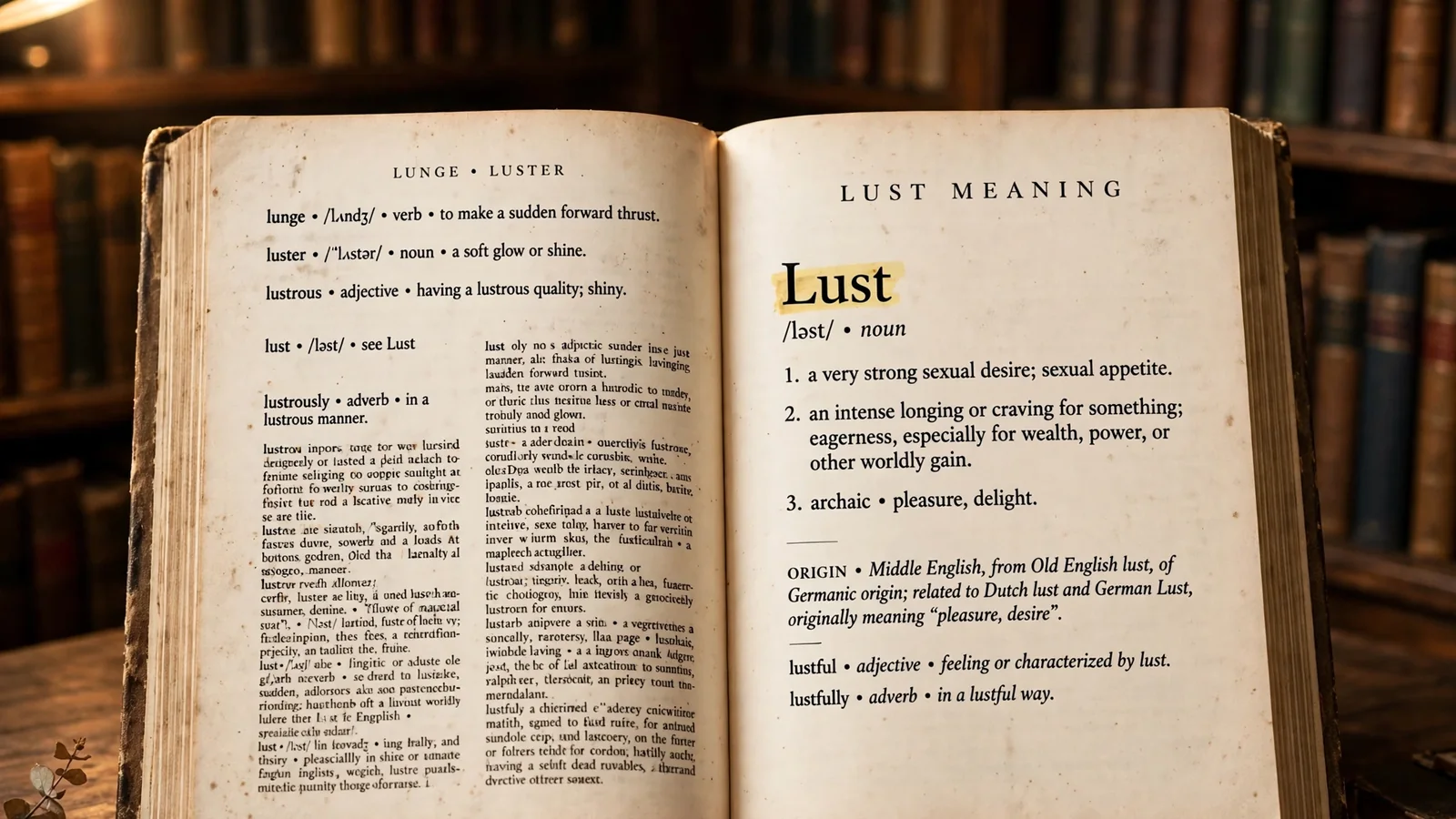
Lust means an intense, powerful craving for something. Most often, it refers to very strong sexual desire. But it also describes any eager longing for a thing or experience, such as wealth, power, food, or adventure.
In short: lust is desire turned up to its highest volume. It is the difference between wanting something and feeling pulled toward it.
The Core Dictionary Meanings of Lust
Like many old words, lust has several meanings that stack on top of each other. Here they are in order of how often people actually use them.
Lust as Sexual Desire
The most common meaning today is a very strong sexual desire. When someone says they feel lust, they usually mean intense physical attraction to another person.
This sense is powerful because it is honest. It names a feeling everyone recognizes. It does not say anything about love, care, or commitment. It only describes the craving.
Lust as Intense Longing
The second major meaning has nothing to do with romance. Lust can mean a fierce hunger for anything: success, money, food, recognition, or an experience.
A runner may lust for the finish line. A chef may lust after a rare ingredient. A traveler may lust for new horizons. The feeling is the same: focused, burning want.
Lust as Pleasure (Archaic)
Long ago, lust simply meant pleasure or delight. This old sense survives in words like lusty, which once described a healthy, vigorous person rather than anything sexual.
You still hear echoes of it today. When someone describes a meal as eaten with lusty appetite, they mean full enjoyment, not anything romantic. The word has simply drifted.
Lust vs Love vs Desire vs Infatuation vs Passion
People mix these words constantly. They overlap, but they are not the same. Here is how they differ.
- Lust: Intense physical or emotional craving focused on gratification. It is about what someone wants to get or feel.
- Love: Deep care, respect, and attachment. It is about what someone wants to give.
- Desire: A general word for wanting something. Lust is a stronger, more urgent form of desire.
- Infatuation: A short-lived, idealized obsession with a person. It usually fades fast once reality arrives.
- Passion: Strong feeling that can fuel love, art, or work. Passion can be warm and lasting; lust tends to be hot and brief.
The simplest test is this. Lust asks, “What do I want right now?” Love asks, “What do you need?” Both can exist together, but one without the other feels very different.
The Origin and History of the Word Lust
Lust is an old Germanic word. It comes from Old English lust, which meant pleasure, delight, or desire. Dutch still uses lust for pleasure, and German Lust means desire or appetite.
Over centuries, the meaning narrowed. English speakers began using lust mainly for intense craving, and then mostly for sexual craving. Religious writing helped drive that shift.
By the late Middle Ages, the word had picked up moral weight. What began as a neutral word for delight became one of the most charged words in the language.
Lust in Religion and Morality
Ask about lust in a religious context and you will hear one phrase above all: the seven deadly sins. Lust is one of the seven, alongside pride, greed, envy, gluttony, wrath, and sloth.
In this tradition, lust means desire that has broken free of reason and respect. It is not simply attraction. It is attraction treated as the only thing that matters.
Different faiths handle it differently. Christianity traditionally warns against lustful thoughts, not just lustful acts. Other traditions focus more on if desire harms others or distracts from higher goals.
The related words matter too. Lustful is the adjective: feeling or showing lust. Lustfully is the adverb: in a lustful way. Lustfulness is the noun for the quality itself.
Lust for Things Beyond Romance
Some of the most interesting uses of lust have nothing to do with people at all. English builds whole ideas from this one word.
Lust for Life
Lust for life means a fierce joy in being alive. It describes someone who dives into experiences with energy and appetite.
This is one of the most positive uses of the word. A person with lust for life travels, tastes, laughs, and tries. The craving is aimed at living fully.
Bloodlust
Bloodlust means a hunger for violence or battle. It appears in sports talk, video games, and history books.
Unlike lust for life, this phrase is almost always negative. It suggests cruelty, not vitality. Context decides which way the word leans.
Wanderlust
Wanderlust means a strong desire to travel and explore. It comes from German: wandern (to wander) plus Lust (desire or pleasure).
Travel brands and Instagram captions love this word. It is playful, romantic, and entirely free of the darker baggage lust sometimes carries.
Lust for Power
Lust for power describes a craving for control over others. News headlines use it for politicians, executives, and dictators.
This is the moral opposite of lust for life. It points to ambition that has curdled into something selfish. The word still fits because the feeling is the same: a hunger that is hard to stop.
Lust in Popular Culture
Pop culture keeps lust in the spotlight. Songwriters use it to describe magnetic attraction in three minutes or less. A lyric about lust needs no explanation. Listeners feel it instantly.
Movies use the word more carefully. A film about lust usually explores temptation and its cost. The story asks what happens when craving wins over judgment.
Advertisers love the energy of the word without its risks. A perfume ad hints at lust. A travel ad sells wanderlust. The word promises intensity, and intensity sells.
This constant exposure is why most people know the word long before they can define it. Lust is part of the cultural air.
How People Use Lust Today
The word lives in many corners of modern life. Here is what people usually mean when they say it.
Lust in Texting and Social Media
In texts and DMs, lust is blunt and playful. Someone might write “this is pure lust” about a dessert, a car, or a celebrity photo.
On TikTok and Instagram, captions like “lusting over this outfit” mean strong admiration. It is casual, exaggerated, and rarely literal. The word has become a stylish way to say “I want that badly.”
Lust in Dating
On dating apps and in relationship talk, lust is honest shorthand. “It started as lust” means the attraction was physical first.
Dating coaches often ask if a connection is lust or something deeper. It is a useful label because it separates chemistry from compatibility. Both matter, but they are different things.
Lust in Gaming
Gamers use lust for in-game hunger. A player might talk about “lust for loot” or “bloodlust mode” when chasing wins aggressively.
It is almost always tongue-in-cheek. The word adds drama to grinding for gear or climbing ranked ladders. Nobody takes it literally here.
Lust in Workplace Talk
At work, lust usually points to ambition. “He has a lust for the corner office” means he craves promotion intensely.
It can be praise or warning. A lust for excellence sounds admirable. A lust for power sounds dangerous. The noun it follows changes everything.
Realistic Conversation Examples
Seeing the word in action makes it clearer. Here are realistic examples.
- “This pasta is amazing. I have a serious lust for Italian food tonight.” (harmless craving)
- “They met last month. It is pure lust right now, no idea if it will last.” (physical attraction)
- “She has a real lust for life. Every weekend is a new adventure.” (positive energy)
- “His lust for power is starting to worry the whole team.” (negative ambition)
Notice how the word bends. Same word, four different temperatures. Context is everything.
Positive and Negative Connotations
Lust is not always dark, and it is not always light. It takes its color from what it points to.
Positive uses include lust for life, lust for knowledge, and lust for adventure. These describe energy, curiosity, and joy. They celebrate appetite for good things.
Negative uses include lust for power, bloodlust, and plain lustful behavior. These describe appetite that harms. The line is simple: does the craving respect other people?
Usage Tips
Use lust with care and it becomes a precise tool. A few tips help.
First, match the word to the intensity. Lust means strong feeling. Using it for mild interest sounds odd.
Second, watch your audience. In casual settings it is playful. In formal writing it can sound too heated.
Third, pair it with the right noun. “Lust for learning” inspires. “Lust for revenge” alarms. The partner word does half the work.
Common Misconceptions and Mistakes
Several myths about lust keep circulating. Let us clear them up.
One misconception is that lust always means something sexual. It does not. Most compound phrases prove this, from wanderlust to lust for life.
Another is that lust and love cannot coexist. They often do. Healthy relationships usually include both attraction and care.
A common mistake is confusing lustful with lusty. Lustful means full of lust, often sexual. Lusty means healthy and vigorous, as in a lusty laugh or a lusty appetite. They are not interchangeable.
Another error is treating infatuation as lust. Infatuation is an obsession with a person. Lust is a craving for a feeling. They overlap but they are not twins.
Key Facts About Lust
Here is a quick summary of everything that matters about the word.
- Meaning: An intense, powerful craving or desire, most often sexual, but also used for any strong longing.
- Origin: Old English lust, meaning pleasure or delight; Germanic roots shared with Dutch and German.
- Common usage: Romance, texting, social media slang, motivational phrases, compound words like wanderlust and bloodlust.
- Tone: Varies by context: playful in casual speech, serious or moral in religious and formal contexts.
- Popularity: Extremely common. It appears in songs, sermons, ads, memes, and everyday talk.
- Related terms: Desire, craving, passion, infatuation, longing, appetite, the seven deadly sins, wanderlust.
FAQs About Lust Meaning
What is the simple meaning of lust?
Lust means a very strong desire or craving. It usually refers to intense sexual attraction, but it can also mean an eager longing for anything, like power, food, travel, or success.
Is lust the same as love?
No. Lust is craving focused on gratification. Love is care, respect, and attachment focused on another person’s well-being. They often appear together, but they are different feelings.
What is the difference between lust and desire?
Desire is the general word for wanting something. Lust is a more intense, urgent, and consuming form of desire. All lust is desire, but not all desire is lust.
Why is lust one of the seven deadly sins?
In Christian tradition, lust is listed among the seven deadly sins because it represents desire that overpowers reason and respect for others. It is treated as craving that has gone beyond healthy bounds.
What does “lust for life” mean?
Lust for life means a passionate joy in living. It describes someone who embraces experiences with energy and appetite. It is one of the most positive uses of the word.
What does it mean when someone says they are “lusting” over something?
They mean they strongly want it. On social media, “lusting over” a dress, a car, or a vacation is casual slang for intense admiration. It is rarely meant literally.
Is lust always bad?
No. The word itself is neutral. Lust for life, knowledge, or adventure is positive. It becomes negative when the craving harms others or ignores their consent and dignity.
What is the difference between lustful and lusty?
Lustful means feeling or showing lust, often in a sexual sense. Lusty means healthy, vigorous, and full of energy, like a lusty appetite or a lusty cheer. They look similar but mean different things.
Can lust turn into love?
Yes, it can. Many relationships begin with physical attraction and grow into deep love over time. The key difference is if care, trust, and respect grow alongside the craving.
What is bloodlust?
Bloodlust means a hunger for violence or battle. It is used in gaming, sports talk, and history. Unlike lust for life, it carries an almost entirely negative tone.
Conclusion
Lust is one of the richest words in English. It names a feeling everyone knows: the pull of something wanted so badly it is hard to think of anything else.
Remember the three layers. At its core, lust is intense craving. In romance, it means powerful attraction. In language, it builds phrases like lust for life, bloodlust, and wanderlust that cover everything from joy to danger.
The practical rule is simple. Let context lead. In a text to a friend, lust is playful. In a moral debate, it is heavy. In your own goals, aim your hunger at things that grow you.
Use the word well and it rewards you. Lust, understood rightly, is not just a warning from old sermons. It is a map of human desire, showing where our strongest appetites live and how to name them honestly.

I am Sophia Bennett, is a digital resources and online tools writer at LinkVistaHub. She enjoys exploring useful websites, emerging digital tools, productivity platforms, and practical online resources that help people work smarter and discover valuable information.