The name Seneca pops up in philosophy books, history classes, national parks, and even American town names, yet most people only have a vague idea of what it means.
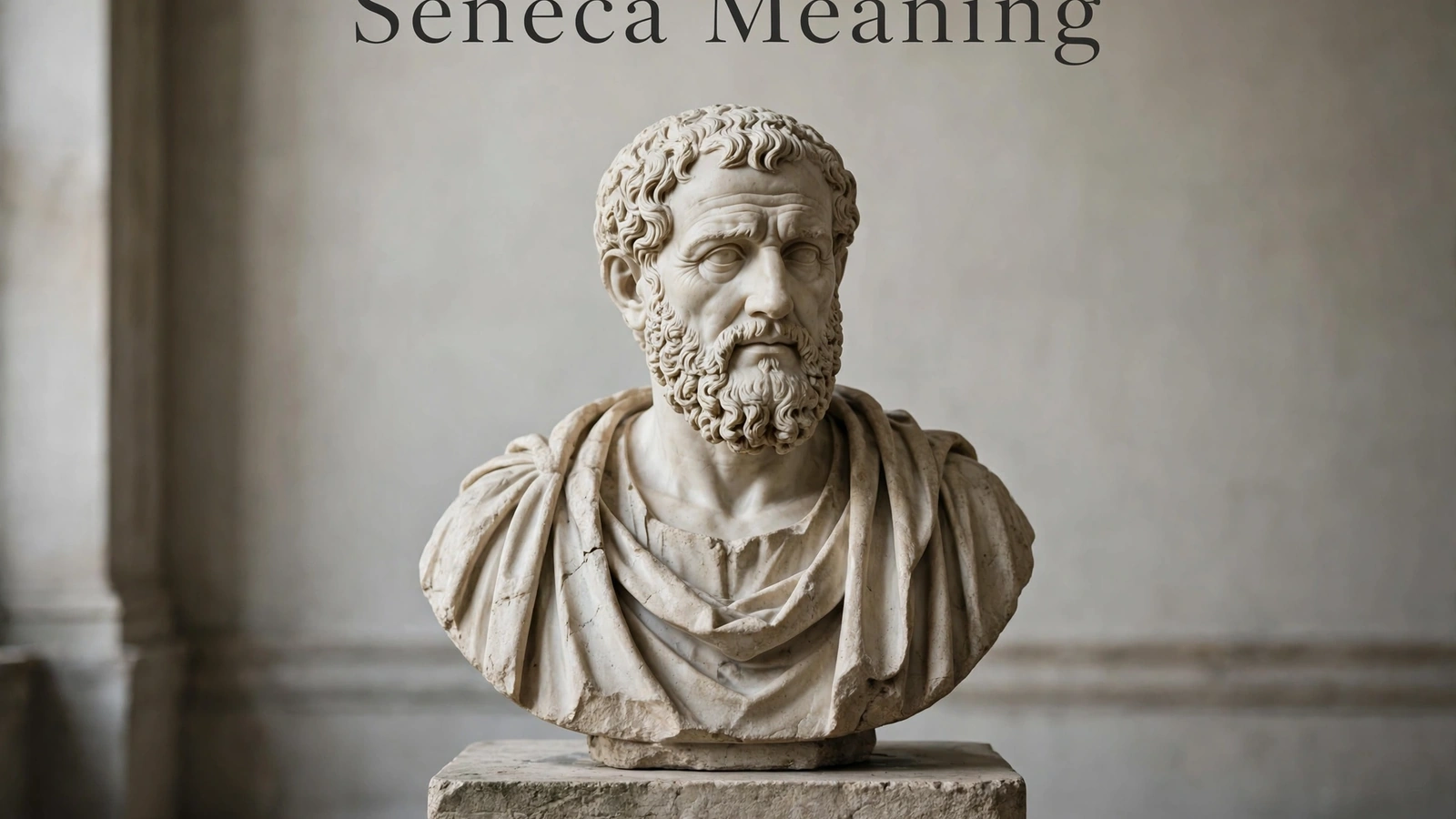
If you have searched for the Seneca meaning, you are probably looking for Seneca the Younger, the Roman Stoic philosopher whose sharp, practical Moral Letters on how to live well are still quoted across social media two thousand years later.
His short, quotable lines on time, worry, and resilience sit at the heart of today’s Stoicism revival, and new readers keep discovering him through podcasts, bestselling books, and daily quote pages.
But the word travels further than ancient Rome. It is also the name of a Native American nation, a famous New York lake and waterfall town, and the birthplace of the American women’s rights movement.
In this guide, we unpack every layer, from the Letters to Lucilius to the Seneca Nation and Seneca Falls, so you leave with the complete picture of what Seneca means and why it still matters today.
If you found him through a quote page, a book on Stoicism, or a map of New York, this guide gives you the full story in one place.
What Does Seneca Mean? A Direct Answer
Seneca most commonly refers to Lucius Annaeus Seneca, known as Seneca the Younger, a Roman Stoic philosopher who lived from about 4 BCE to 65 CE.
He is famous for practical writings on ethics, time, anger, and resilience, including the Moral Letters to Lucilius and essays such as On the Shortness of Life.
The name also belongs to the Seneca Nation, one of the six nations of the Haudenosaunee (Iroquois) Confederacy, and to places like Seneca Lake and Seneca Falls in New York.
Seneca the Philosopher: Who Was He?
Lucius Annaeus Seneca was born in Cordoba, in Roman Spain, around 4 BCE. His father, Seneca the Elder, was a well-known writer on rhetoric.
As a young man, Seneca moved to Rome to study philosophy. He was drawn to Stoicism, a school of thought that taught people to focus on what they can control and accept what they cannot.
Seneca rose high in Roman public life. He became a senator, a wealthy man, and eventually the tutor and chief adviser to the young emperor Nero.
Life in the Roman Empire
Rome in the first century CE was the most powerful city on earth, and also one of the most dangerous. Seneca thrived in this world while writing about how little worldly success matters.
That tension between his life and his teaching is part of what makes him so interesting. He owned vast estates, yet he wrote that true wealth is wanting little.
Seneca and Nero
Seneca’s most famous and tragic relationship was with Nero, the emperor he tutored from boyhood. For several years, Seneca helped steer Nero toward fair rule.
But Nero grew cruel and unstable. In 65 CE, he accused Seneca of joining a plot against him. The evidence was thin, but the order was clear.
Nero commanded Seneca to take his own life. Seneca obeyed in the Roman fashion, opening his veins in a calm, deliberate death that he had spent his whole philosophy preparing for.
Seneca and Stoicism
Stoicism is a practical philosophy of life, and Seneca is one of its clearest voices. He wrote not for scholars but for busy people trying to live well.
His version of Stoicism is warm and human. He admits his own faults, jokes about his age, and treats the reader like a friend.
For Seneca, philosophy is not a classroom subject. It is medicine for the mind, meant to be used every day.
Core Stoic Ideas in Seneca’s Work
A few big ideas run through everything Seneca wrote.
- Control what you can, accept what you cannot. Most of our suffering comes from fighting things outside our power.
- Time is your most precious possession. Money lost can be earned back, but a wasted hour is gone forever.
- Practice poverty in small doses. Occasionally live simply so you stop fearing loss.
- Memento mori, remember you will die. Thinking about death is not gloomy for Seneca. It sharpens what matters.
- Anger is a choice, not a force. In his essay On Anger, he argues that rage is a habit we can unlearn.
Famous Seneca Quotes and What They Mean
Seneca’s lines are short, quotable, and built for real life. Here are a few of the most famous, with plain explanations.
“We suffer more often in imagination than in reality.” Most of our worry is about things that never happen.
“It is not that we have a short time to live, but that we waste a great deal of it.” Life is long enough if we stop throwing hours away.
“Luck is what happens when preparation meets opportunity.” Success looks like chance from the outside, but it is built quietly beforehand.
“Difficulties strengthen the mind, as labor does the body.” Hard times are training, not punishment.
Seneca’s Main Works
Seneca wrote more surviving Stoic prose than any other ancient author. His books are short, readable, and still in print everywhere.
Letters to Lucilius
The Moral Letters to Lucilius are Seneca’s masterpiece: 124 short letters to a friend that read like a long conversation. Each letter takes up one practical topic, from handling grief to spending a day well.
A seneca letters to lucilius summary in one line would be this: a complete course in living, taught one honest letter at a time.
The letters feel modern because Seneca writes about the traffic jams of the soul: noisy neighbors, bad bosses, aging bodies, restless minds.
Essays and Dialogues
Seneca’s essays, called Dialogues, cover the big problems of life in short, punchy form.
On the Shortness of Life argues that life only feels short because we scatter our attention across a hundred trivial things.
On Anger is one of the first great self-help books on managing rage, written for Nero’s brother.
On Providence asks why bad things happen to good people, and answers with Stoic calm.
On Clemency, written for the young Nero, argues that mercy is the mark of a strong ruler.
Tragedies
Seneca also wrote plays, including Medea and Phaedra. They are dark and full of furious emotion, a warning about what happens when passion rules and reason sleeps.
The Meaning and Origin of the Name Seneca
So what does the name Seneca mean, and where does it come from? The answer splits into two different stories.
The Latin Roots
The Roman name Seneca most likely comes from the Latin word senex, which means old man. In Rome, the name may have started as a nickname for a wise or grave-looking man, since age was linked with wisdom.
This makes the name a good fit for the philosopher. Seneca wrote constantly about time, aging, and the wisdom of later life.
The Seneca Nation and the Seneca Language
The other Seneca has nothing to do with Rome. The Seneca Nation is one of the six nations of the Haudenosaunee, also called the Iroquois Confederacy.
Their own name for themselves is Onondowahgah, which means People of the Great Hill. They are the westernmost nation of the confederacy.
The Seneca language is an Iroquoian language, related to Mohawk, Oneida, Onondaga, Cayuga, and Tuscarora.
The word Seneca itself is believed to come from an Algonquian term meaning place of the stone, though the exact history is debated.
Today the Seneca Nation of Indians has reservations in western New York, including the Allegany, Cattaraugus, and Oil Spring territories.
Seneca Beyond the Philosopher
The name shows up on the American map in several important places, all linked to the Native American nation rather than the Roman.
Seneca Lake
Seneca Lake is the largest of the Finger Lakes in upstate New York. It is about 38 miles long and one of the deepest lakes in the United States.
The lake sits in wine country, and its shores are lined with vineyards, small towns, and summer homes.
It was named for the Seneca people who lived around it long before European settlers arrived.
Seneca Falls and the Women’s Rights Convention
Seneca Falls, a town at the north end of the lake, holds a special place in American history.
In 1848 it hosted the first women’s rights convention in the United States, where the Declaration of Sentiments demanded equal rights for women. It is now a national historical park.
So when people search seneca falls, they are usually looking for this landmark of the women’s rights movement, not the philosopher.
Other Uses of the Name
The name appears in a few more places worth knowing.
Seneca Army Depot, a former military base in New York, was famous for storing weapons and for its herd of rare white deer.
Seneca is also a genus of plants in the daisy family, and the name of several schools, streets, and businesses.
In the Hunger Games novels, Seneca Crane is the name of a character, a nod that borrows the Roman flavor of the name.
Applying Seneca’s Wisdom in Modern Life
Seneca’s ideas are not museum pieces. They work surprisingly well in a world of smartphones, deadlines, and social media.
Here are real-life scenarios where his teaching applies directly.
- Morning anxiety about the day ahead. Seneca would say: list what is actually in your control today, and release the rest before breakfast.
- Doomscrolling at midnight. He wrote that we waste life on things that add nothing. He would call the phone a thief of hours.
- Road rage in traffic. His essay On Anger argues that anger always costs more than the insult that caused it. Breathe, and let the driver go.
- Fear of changing careers at forty. He would remind you that it is not the years that matter but how awake you are inside them.
- Grief after losing someone. His letters on grief say: mourn honestly, but do not let mourning become your whole identity.
A Simple Daily Stoic Routine From Seneca
You can borrow a full practice from his letters in under ten minutes.
- Morning: ask what is in your control today, and what is not. Write both lists.
- Midday: pause once and notice if you are wasting an hour on something you will not remember next week.
- Evening: review the day briefly. What did you handle well? What would you do differently? Then let it go.
Common Misconceptions About Seneca
A few myths follow Seneca around. Let us clear them up.
- He was not a monk or a hermit. He was a rich, busy public man who wrote about philosophy between meetings.
- Stoicism is not about having no feelings. Seneca cries in his letters. The goal is to feel deeply without being ruled by feelings.
- He did not invent Stoicism. The school was founded by Zeno of Citium about 300 years before Seneca. Seneca was its most readable popularizer.
- His wealth does not automatically make him a fraud. He openly called himself a work in progress, not a finished sage.
- He did not hate pleasure. He warned that pleasure is a fine servant but a terrible master.
Seneca vs Marcus Aurelius vs Epictetus
The three great Roman Stoics are often mentioned together, but they are very different writers.
Seneca was the adviser. A wealthy senator who wrote practical letters to friends about daily life.
Marcus Aurelius was the emperor. His Meditations are private notes to himself, never meant for publication, full of stern self-talk.
Epictetus was the freed slave. His teaching is the toughest of the three, focused on radical acceptance and inner freedom.
If you want warmth and everyday examples, start with Seneca. If you want discipline, read Marcus Aurelius. If you want a spiritual workout, read Epictetus.
All three agree on the core: control what you can, accept what you cannot, and use reason to guide the emotions.
Key Facts About Seneca: A Quick Summary
Here are the essential facts in one place.
- Meaning: most often, the Roman Stoic philosopher Lucius Annaeus Seneca; also a Native American nation and several place names.
- Origin of the name: probably Latin senex, meaning old man; the tribal name likely comes from an Algonquian word for place of the stone.
- Common usage: philosophy, classical literature, history, and as a place or tribal name in New York State.
- Tone: practical, warm, and direct; Seneca writes like a friend, not a lecturer.
- Popularity: one of the most quoted ancient authors today, with a large modern Stoicism revival on podcasts, books, and social media.
- Related terms: Stoicism, Letters to Lucilius, Moral Letters, Marcus Aurelius, Epictetus, Zeno of Citium, Seneca Falls, Seneca Nation, Seneca Lake.
FAQs About Seneca Meaning
Who was Seneca in simple terms?
Seneca was a Roman philosopher, writer, and adviser to Emperor Nero who lived about two thousand years ago. He is best known for making Stoicism practical through his letters and essays on how to live a good life.
What is Seneca most famous for?
He is most famous for the Moral Letters to Lucilius, 124 letters on ethics and daily life, and for essays like On the Shortness of Life and On Anger. His short lines on time, worry, and resilience are shared widely today.
What does the name Seneca mean in Latin?
The Roman name Seneca likely comes from senex, the Latin word for old man. It may have begun as a nickname suggesting wisdom or a grave manner, since age was associated with good judgment in Roman culture.
Is Seneca a Native American name too?
Yes. The Seneca Nation is one of the six nations of the Haudenosaunee, or Iroquois Confederacy, in what is now New York State. Their own name for themselves is Onondowahgah, meaning People of the Great Hill.
What is the Seneca Falls connection?
Seneca Falls is a town in New York named for the Seneca people. In 1848 it hosted the first women’s rights convention in the United States, where the Declaration of Sentiments demanded equal rights for women. It is now a national historical park.
What are the best Seneca books to start with?
Start with the Letters to Lucilius, which you can read a few at a time like daily meditations. Then try On the Shortness of Life, a short essay that will change how you spend your hours. Both are available in clear modern translations.
How is Seneca different from Marcus Aurelius?
Seneca writes warm, practical letters to friends about everyday problems. Marcus Aurelius wrote private notes to himself as emperor, and his tone is sterner and more inward. Seneca is the easier starting point for most new readers.
Did Seneca really practice what he preached?
He tried, and he admitted when he fell short. Critics point to his great wealth and his service to the cruel emperor Nero. He called himself a patient in philosophy’s hospital, not a doctor, and that honesty is part of his appeal.
Why is Seneca popular again right now?
Modern life feels rushed, anxious, and noisy, which is exactly the world Seneca wrote for. His short letters fit the age of podcasts and social media, and the Stoicism revival has made his quotes some of the most shared philosophy online.
What is a good first Seneca quote to remember?
Try this one: “It is not that we have a short time to live, but that we waste a great deal of it.” Put it on your phone wallpaper. Every time you reach for a distraction, it will ask you a quiet question.
Conclusion
The Seneca meaning you came looking for has several answers, and now you hold them all.
Most often, it means the Roman Stoic philosopher whose letters still teach us to guard our time, master our anger, and face hardship with calm courage.
It also means a proud Native American nation, a deep Finger Lake, and the small town where American women first demanded the vote.
What ties these meanings together is endurance. The philosopher’s words survived two thousand years because they work.
His philosophy is not about ancient Rome. It is about your morning, your temper, your phone, and your fear.
Start small, as he would advise. Read one letter. Guard one hour. Question one worry. Seneca promised no easy life, only a well-lived one, and that promise still holds.

I am Alex Carter, is a web resources and digital tools writer at Linkvistahub. He enjoys discovering useful websites, online tools, productivity resources, and practical digital solutions that can make everyday tasks easier.