
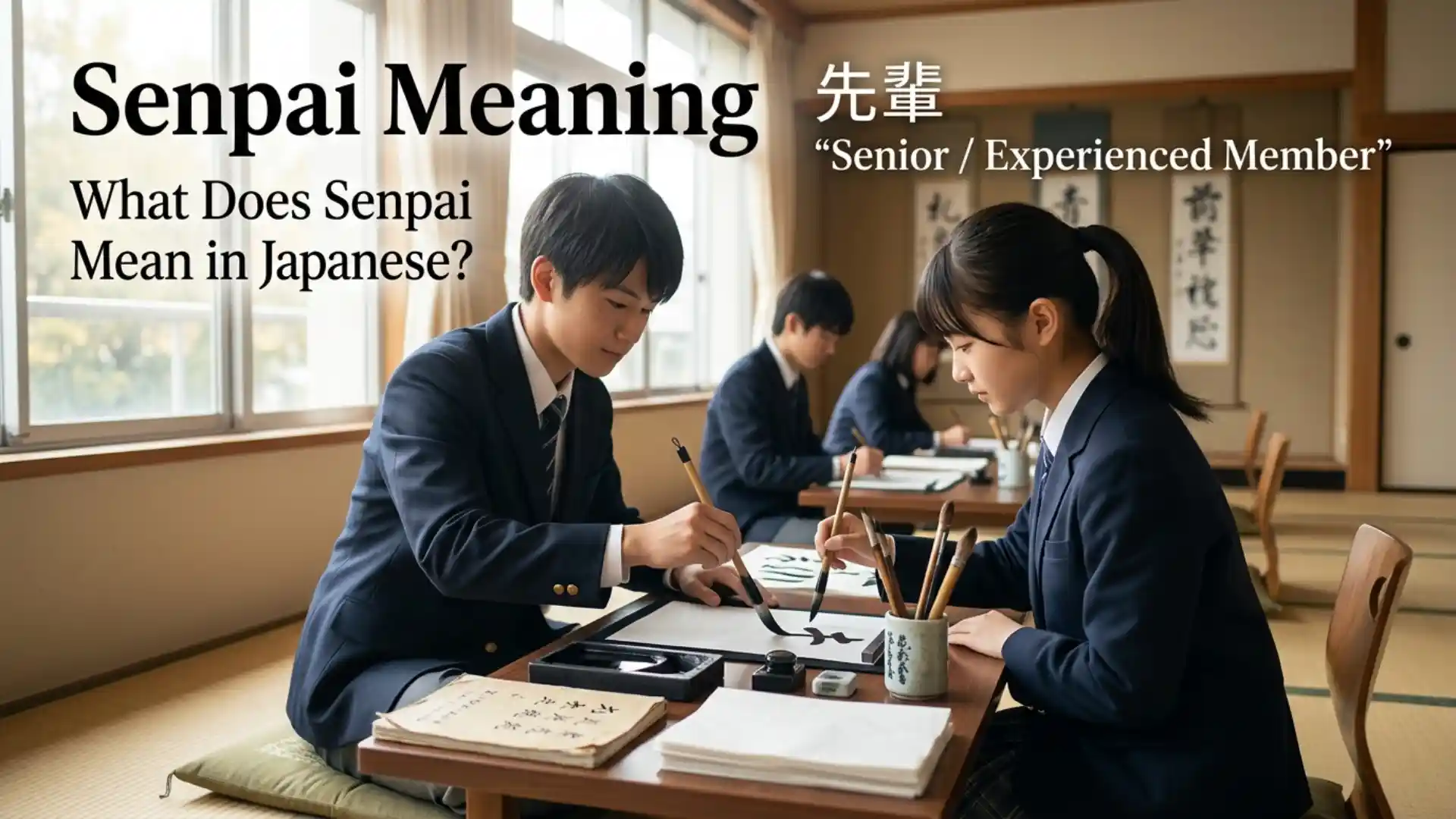
Have you ever seen someone online say “senpai” and wondered what it actually means?
The word appears everywhere from anime and manga to gaming, social media, memes, and everyday conversations about Japanese culture.
For many English speakers, senpai’s meaning seems simple at first, but the word carries an important idea about experience, seniority, and social relationships in Japan.
In Japanese, senpai (先輩) generally refers to someone who has more experience or seniority within a particular group, school, workplace, club, or organization.
The person with less experience is often called kōhai (後輩). Unlike a simple English equivalent such as “senior,” however, senpai describes a social relationship that can involve guidance, respect, responsibility, and familiarity.
You may also encounter phrases such as “notice me, senpai” in memes and internet culture. In these contexts, the word often has a playful meaning that differs from its traditional Japanese use.
Understanding what senpai mean can therefore help you understand not only Japanese vocabulary but also the cultural relationships frequently portrayed in anime, manga, games, and Japanese media.
What Does Senpai Mean?
Senpai (先輩) is a Japanese term for a person who has more experience or seniority than another person within the same institution, group, activity, or social setting.
For example, a second-year student may be a senpai to a first-year student. A more experienced member of a school club can also be a senpai to a newer member.
The relationship is relative. Someone can be a senpai to one person while being a kōhai to someone else.
In simple terms:
Senpai means a more experienced or senior member of a group, especially someone who joined or started earlier than you.
The term is not necessarily about age. A younger person can sometimes be a senpai if they have greater seniority or experience in a particular setting.
Senpai Meaning in English
There is no single English word that perfectly captures every aspect of senpai meaning.
Depending on context, it can be translated as:
- Senior
- Senior member
- Experienced colleague
- Upperclassman
- Mentor-like senior
- More experienced person
However, “senior” is often the closest general translation.
The important difference is that senpai describes a relationship within a group. It is not simply a title that means someone is older.
For example, imagine two employees joining the same company. One started working there two years earlier. The newer employee may regard the experienced employee as their senpai, even if the newer employee happens to be older.
What Does Senpai Mean in Japanese?
In Japanese, senpai is written as:
先輩
It refers to someone who has seniority or greater experience in a shared environment.
The word is commonly used in:
- Schools
- Universities
- Sports clubs
- Music groups
- Workplaces
- Martial arts
- Student organizations
- Professional organizations
Senpai relationships are especially noticeable in environments where people enter and progress through a structured group over time.
Senpai vs. Kōhai
To understand senpai properly, it helps to understand kōhai.
Kōhai (後輩) refers to someone who is junior or less experienced within the same group.
These two concepts are often discussed together:
| Term | Japanese | Basic Meaning |
| Senpai | 先輩 | Senior or more experienced member |
| Kōhai | 後輩 | Junior or less experienced member |
For example, a third-year university student may be a senpai to a first-year student. The first-year student is the third-year student’s kōhai.
The relationship is based primarily on seniority and experience, rather than simply age.
Is Senpai the Same as Mentor?
Not exactly.
A mentor is usually someone who intentionally provides guidance, advice, or professional development.
A senpai may provide guidance to a kōhai, but being someone’s senpai does not automatically mean being their formal mentor.
For example, an experienced employee might answer questions from a new employee because they are a senpai. But they may not have a formal mentoring role.
This distinction is important when translating Japanese social relationships into English.
Senpai Meaning in School and Anime
The word senpai is especially familiar to international audiences because of Japanese anime and manga.
In a school setting, an older student or student who entered the school earlier may be a senpai to a newer student.
You might see characters say:
- “Senpai!”
- “Thank you, senpai.”
- “My senpai helped me.”
- “She is my senpai at school.”
Anime often uses senpai relationships as part of character development. A younger student may admire, respect, compete with, or develop a close friendship with an older student.
Because anime has introduced the word to audiences around the world, senpai meaning in anime can sometimes feel more romantic or dramatic than the word’s ordinary Japanese meaning.
Senpai Meaning in Anime
In anime, senpai can simply mean an older or more experienced member of the same school, club, team, or organization.
For example, a first-year student might call a second-year club member “senpai.”
However, fictional stories can add emotional meanings to the relationship.
A character might view their senpai as:
- A role model
- A friend
- A rival
- A teacher-like figure
- Someone they admire
- A romantic interest
The word itself does not automatically mean “crush” or “love interest.”
That distinction is important.
If an anime character says senpai, the safest interpretation is usually “senior” or “more experienced member,” unless the surrounding story establishes another relationship.
Senpai Meaning on Social Media
On social media, senpai is often used more casually than in traditional Japanese contexts.
Fans may call a person senpai when that person appears more knowledgeable or experienced in a particular fandom, hobby, game, or creative community.
For example:
“You have been drawing anime characters for five years. You’re basically my senpai.”
Here, the speaker is using senpai playfully to mean someone who has more experience.
The usage does not necessarily imply a formal Japanese senpai-kōhai relationship.
Senpai Meaning in Texting
In texting, senpai usually keeps the same basic idea of a more experienced or admired person.
However, online users may use it humorously.
For example:
Person A: “How did you get so good at this game?”
Person B: “Years of practice.”
Here, senpai means something like “experienced master” or “someone I can learn from.”
It is usually playful rather than formal.
What Does “Notice Me, Senpai” Mean?
One of the most famous internet expressions involving the word is:
“Notice me, senpai.”
This phrase became popular through anime fandom and internet meme culture.
It usually describes someone desperately or playfully wanting the attention, recognition, or approval of a person they admire.
For example:
“I finally got a reply from my favorite creator. Notice me, senpai!”
The phrase is often humorous and does not necessarily represent an actual Japanese expression used in everyday life.
It has become a recognizable part of English-language internet culture.
Is Senpai a Romantic Term?
Not inherently.
This is one of the biggest misunderstandings about the word.
Senpai simply describes a senior or more experienced person in a particular social setting.
A person can have a senpai who is:
- A friend
- A colleague
- A coach
- A club member
- A classmate
- A professional contact
- A romantic interest
Romance is determined by the relationship, not by the word itself.
Anime and manga sometimes portray romantic relationships between senpai and kōhai, which may contribute to the misconception.
How to Use Senpai in a Sentence
Here are some examples of how the word can be used:
- My senpai taught me how to play the guitar.
- She is my senpai in the university photography club.
- I asked my senpai for advice before the competition.
- My senpai helped me understand the project.
- He looks up to his senpai at work.
- I learned a lot from my senpai.
- The new student thanked her senpai for helping her.
- You’re my gaming senpai now!
- Notice me, senpai!
- My senpai showed me how to use the equipment.
These examples show how the word can move from traditional Japanese contexts to playful online usage.
Senpai Meaning in the Workplace
Senpai relationships can also exist in Japanese workplaces.
An employee who has been with an organization longer may be a senpai to a newer employee.
The senior employee may help the newer colleague understand:
- Workplace procedures
- Company customs
- Professional expectations
- Practical tasks
- Social etiquette
However, senpai does not necessarily mean manager or supervisor.
A manager has formal authority because of their position. A senpai has seniority or experience within the relevant group.
A person can therefore be your senpai without being your boss.
Senpai Meaning in Gaming
Gaming communities have adopted many Japanese terms, including senpai.
A player might jokingly call a highly skilled or experienced player their senpai.
For example:
“You’ve reached Grandmaster twice. You’re definitely my senpai.”
In this context, the word means something like:
“You are much more experienced than me, so teach me your ways.”
This is usually an informal, humorous use rather than a traditional Japanese social relationship.
Senpai Meaning in Dating
In dating conversations, senpai can sometimes appear when one person admires another person who is more experienced or senior.
For example, an anime fan might jokingly call their workplace crush “senpai.”
But the word itself does not mean:
- Boyfriend
- Girlfriend
- Crush
- Lover
- Partner
The romantic meaning comes from the context surrounding the relationship.
Senpai vs. Sensei
Another common confusion is senpai vs. sensei.
Although both words can refer to people who have knowledge or experience, they are not interchangeable.
Senpai generally refers to someone senior or more experienced within a shared group.
Sensei (先生) is commonly used for teachers, instructors, doctors, and certain other respected professionals.
For example:
| Term | General Meaning | Typical Context |
| Senpai | Senior or experienced member | School, clubs, workplace |
| Kōhai | Junior or less experienced member | School, clubs, workplace |
| Sensei | Teacher/instructor or respected professional | Education, medicine, arts |
Understanding these distinctions makes Japanese dialogue much easier to follow.
Senpai vs. Sempai: Which Spelling Is Correct?
You may encounter both senpai and sempai online.
The standard modern romanization is generally senpai, reflecting the Japanese spelling 先輩.
The pronunciation can sound somewhat like “sempai” to English speakers because of Japanese sound patterns, which helps explain why the alternative spelling appears.
For learners, senpai is the safest spelling to use.
Common Misconceptions About Senpai
Senpai Always Means Older Person
Not necessarily.
Seniority is more important than chronological age.
Senpai Means Teacher
Not exactly.
A senpai may teach or guide a newer member, but the term does not simply mean teacher.
Senpai Means Crush
No.
A senpai can be a romantic interest in a story, but romance is not part of the basic definition.
Everyone in Japan Calls Older People Senpai
This is also too broad.
Senpai is normally relevant to a shared group or institution where seniority matters. Simply being older does not automatically make someone your senpai.
Why Is the Word Senpai So Popular?
The international popularity of senpai is closely connected to the global reach of Japanese popular culture.
Anime, manga, video games, fan communities, memes, and social media have introduced millions of people to Japanese terms.
As a result, some Japanese words have developed a second life in English-language internet culture.
Senpai is a good example because its original social meaning is easy to adapt to online communities.
Someone can be a “senpai” in gaming, art, cosplay, coding, or another hobby simply because they have more experience.
Senpai Meaning: Key Facts at a Glance
| Fact | Answer |
| Japanese word | Senpai |
| Japanese writing | 先輩 |
| Basic meaning | Senior or more experienced member |
| Common relationship | Senpai and kōhai |
| Main contexts | School, work, clubs, organizations |
| Internet usage | Experienced or admired person |
| Famous phrase | “Notice me, senpai” |
| Romantic meaning | Not inherent |
| Related word | Kōhai |
| Similar but different term | Sensei |
Frequently Asked Questions About Senpai Meaning
What does senpai mean in English?
Senpai generally means a senior or more experienced member of a group. Depending on the context, it may be translated as senior, upperclassman, experienced colleague, or senior member.
What does senpai mean in anime?
In anime, senpai usually refers to someone who has greater seniority or experience within a school, club, team, workplace, or organization. Stories may give the relationship romantic or dramatic elements, but those meanings are not part of the word itself.
Does senpai mean crush?
No. Senpai does not literally mean crush. A person may have romantic feelings toward their senpai, but the word simply describes the person’s seniority or experience.
What is the opposite of senpai?
The commonly paired term is kōhai (後輩), meaning a junior or less experienced member of the same group.
What does “notice me, senpai” mean?
“Notice me, senpai” is a popular internet and anime-fandom phrase used humorously to express a desire for attention, recognition, or approval from someone admired.
Is senpai used only for school students?
No. Senpai can be used in various structured groups, including workplaces, clubs, sports organizations, and other communities where seniority or experience matters.
Is senpai the same as sensei?
No. Senpai refers to a senior or experienced member, while sensei commonly refers to a teacher, instructor, doctor, or another respected professional depending on context.
Can a younger person be your senpai?
Yes. Senpai status can depend on experience or seniority within a particular group rather than age alone.
Why do people say senpai online?
People often use senpai online as a playful way to describe someone who is more experienced or skilled in a particular hobby, fandom, game, or community.
Is “sempai” the same as “senpai”?
They generally refer to the same Japanese word, 先輩. “Senpai” is the standard spelling learners will most commonly encounter.
Conclusion
The simplest answer to senpai meaning is “a senior or more experienced member of a shared group.” In Japanese culture, the term describes a relationship based largely on seniority and experience, such as between students, coworkers, club members, or other participants in an organized group.
Anime, manga, gaming, and social media have expanded the word’s popularity worldwide. Online, someone may casually call a skilled or experienced person their senpai, while phrases such as “notice me, senpai” have developed their own playful internet meaning.
The most important thing to remember is that senpai does not automatically mean teacher, crush, older person, or romantic partner. Its meaning depends on the relationship and context.
Once you understand the difference between senpai, kōhai, and sensei, Japanese dialogue and online references to these terms become much easier to understand.

I am Sophia Bennett, is a digital resources and online tools writer at LinkVistaHub. She enjoys exploring useful websites, emerging digital tools, productivity platforms, and practical online resources that help people work smarter and discover valuable information.