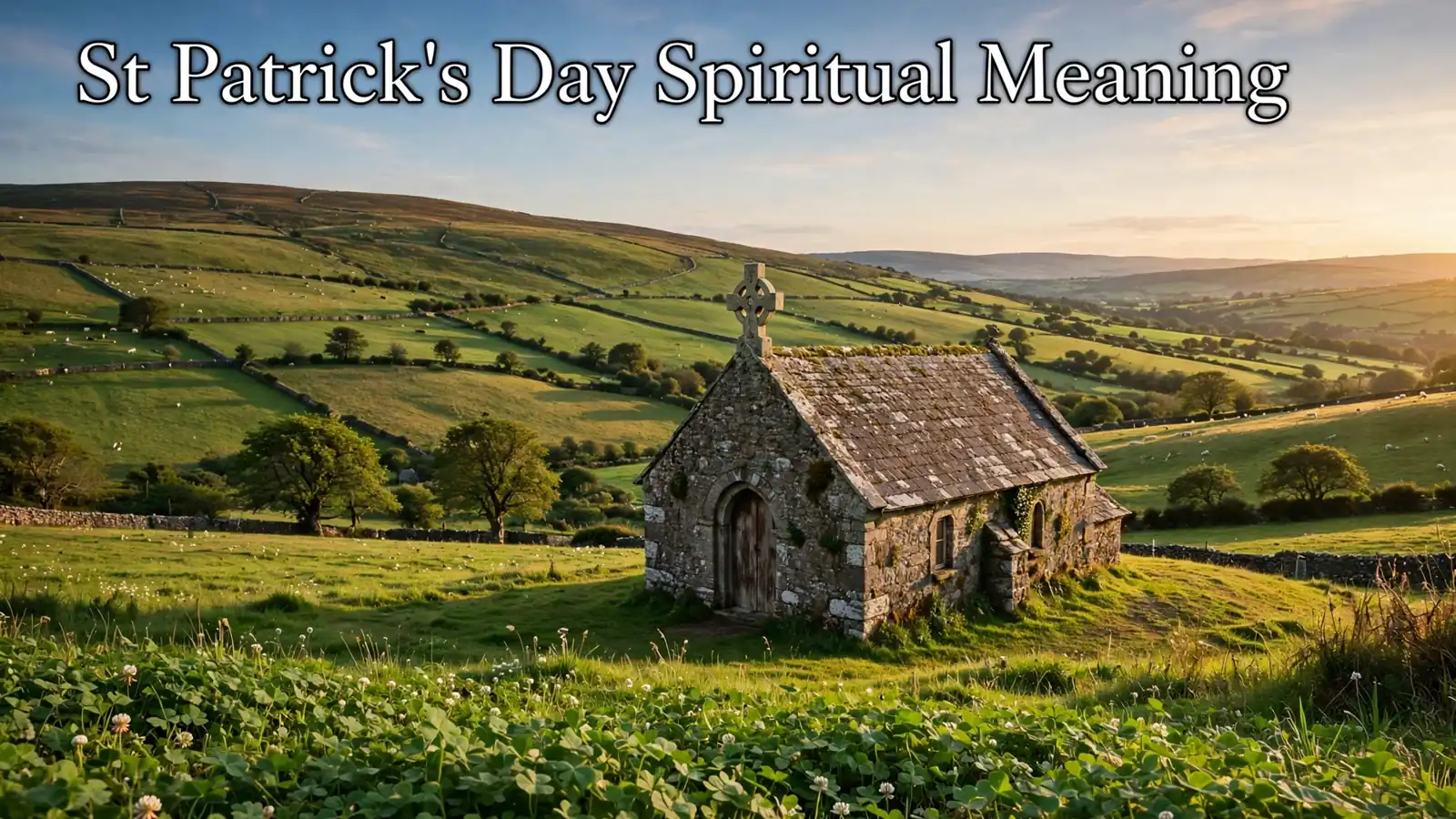
Every year on March 17, green fills the streets, parades roll through cities, and millions of people wear a shamrock with pride. Yet behind the color and the celebration, the St Patrick’s Day spiritual meaning runs much deeper than a party. It is a story of faith, forgiveness, and new beginnings, rooted in the life of a man who returned to the land where he had once lived as a slave, not with anger, but with love.
For many people, this day is a reminder that St Patrick did not only bring a holiday to Ireland. He brought a message of hope that still speaks today, a message about prayer in hard times, about forgiving old hurts, and about starting again when life feels broken. The shamrock, the green clothes, and the parades all point back to that message. If you have ever wondered what this day really means beyond the music and the green, this guide explains the history, the symbols, and the spiritual lessons of St Patrick’s Day in full, so you can celebrate it with understanding as well as joy.
What Is the Spiritual Meaning of St Patrick’s Day?
The spiritual meaning of St Patrick’s Day is renewal through faith. At its heart, the day celebrates the arrival of Christianity in Ireland and the life of St Patrick, the missionary who spread the Christian faith across the island in the fifth century. The feast day on March 17 marks the traditional date of his death, and the Church remembers him as the Apostle of Ireland.
Spiritually, the day stands for three ideas from Patrick’s story. The first is faith that survives hardship. Irish raiders captured Patrick as a teenager and took him to Ireland as a slave, and he spent years herding sheep in lonely hills, and he later wrote that it was during those hard years that he learned to pray. The second is forgiveness: he returned to the people who had enslaved him and preached to them with patience instead of revenge. The third is renewal. Patrick used simple images, like the shamrock, to explain deep truths, and his work helped shape an Irish Christian culture that valued learning, poetry, and community.
For believers today, the day is a chance to reflect on those three ideas. It asks a simple question: what would it look like to meet hardship with prayer, to answer old hurts with forgiveness, and to begin again with fresh hope?
The Meaning of St Patrick’s Day
St Patrick’s Day means different things to different people, and each layer adds to the whole picture.
For the Catholic Church, it is a feast day that honours a saint whose mission changed a nation. Churches hold Masses, and people remember Patrick as an example of missionary courage.
For Irish people around the world, it is also a day of cultural pride. It celebrates Irish heritage, language, music, and identity. The green that fills the streets is a sign of belonging, and for the Irish diaspora, it is a way of staying connected to home.
For many others, the day has become a general celebration of spring and good cheer. March 17 falls close to the spring equinox, a time of new growth, and the shamrock has become a symbol of hope and fresh starts.
The spiritual meaning ties these layers together: celebration and faith are not separate. Joy, community, music, and prayer can all belong in the same day.
The Origin of St Patrick’s Day
The origin of St Patrick’s Day goes back more than 1,500 years, to the life of a real man known mainly from his own writings.
Who Was St Patrick?
St Patrick came from Roman Britain, probably in the late fourth century, with the Roman name Patricius. When he was about sixteen, Irish raiders captured him and took him to Ireland, where he worked as a slave herding sheep. He later wrote in his Confessio, a short spiritual autobiography, that during those years he prayed many times a day and his faith grew strong.
After about six years, he escaped and returned to his family in Britain. He then trained as a priest and felt called to return to Ireland, this time as a missionary. Tradition holds that he landed in Ireland in 432 and spent the rest of his life preaching and founding churches. He died on March 17, in 461 by tradition, and that date became his feast day.
From a Feast Day to a Global Celebration
For many centuries, St Patrick’s Day was mainly a religious feast in Ireland. It was a holy day, with church services in the morning and a family meal afterward. The Church relaxed Lenten rules for the day, so people could enjoy meat and a drink.
The celebration changed when Irish people emigrated in large numbers, especially to the United States in the nineteenth century. Irish immigrants in Boston and New York held parades to show pride in their heritage, and the first recorded parade took place in New York in 1762. Over time, the tradition spread around the world, from Dublin to Chicago, where the river is dyed green each year, to Sydney and Tokyo.
Today, people celebrate St Patrick’s Day in more countries than any other national festival. Parades sometimes hide its spiritual roots, but anyone who looks can still find them.
The History of St Patrick’s Day
We can divide the history of the feast into four periods.
The first period is Patrick’s own lifetime, in the fifth century. Christianity already existed in small pockets, but his mission spread it widely. His approach was gentle and practical: he worked with local kings, used familiar symbols, and trained local clergy.
The second period is the early medieval age, when Irish monks carried learning across Europe. Monasteries in Patrick’s tradition became centres of study, and Irish scholars helped preserve classical texts while much of Europe was in turmoil.
The third period is the time of emigration, from the 1700s onward. Irish immigrants brought the feast with them, and the parade tradition began. In America, the day became a public statement of Irish identity at a time when Irish immigrants often faced prejudice.
The fourth period is the modern global festival. In 1996, the Irish government launched the first official St Patrick’s Festival in Dublin. Today, landmarks from the Sydney Opera House to the Pyramids of Giza light up green on March 17 as part of the Global Greening project.
Spiritual Symbols of St Patrick’s Day
The symbols of St Patrick’s Day carry meanings that go beyond decoration. Each one tells part of the spiritual story.
The Shamrock and the Holy Trinity
The shamrock is the most famous symbol of the day. According to tradition, Patrick used its three leaves to explain the Holy Trinity: Father, Son, and Holy Spirit, three persons in one God. The lesson was simple enough for anyone to remember, and it used a plant that grew all around them. Today, the shamrock stands for faith, hope, and love.
The Color Green
Green is the color of Ireland, known as the Emerald Isle for its green landscape. Spiritually, green stands for growth, life, and renewal. In the Church calendar, it is also the color of ordinary time, the season of steady growth in faith. Wearing green is a small public sign of life and hope.
The Snake and the Staff
Legend says that Patrick drove all the snakes out of Ireland. In fact, Ireland never had snakes after the Ice Age, so the story is symbolic rather than literal. The snake in the Bible often stands for evil or temptation, so driving out the snakes became a picture of Patrick driving out paganism. Artists often show Patrick holding a bishop’s staff, or crozier, which stands for his role as a shepherd.
The Celtic Cross
People also link the Celtic cross, a cross with a circle around the intersection, with Patrick’s Ireland. Tradition says Patrick combined the Christian cross with the pagan sun symbol to show that the old light of the sun was now fulfilled in Christ. The circle stands for eternity, the idea that God’s love has no beginning and no end.
How St Patrick’s Day Is Celebrated Today
Modern celebrations take many forms, and the spiritual side is still present in several of them.
- Churches hold services and Masses in the morning in Ireland and in Irish communities abroad, and many people begin the day with prayer.
- Parades fill the streets of Dublin, New York, Boston, Chicago, and dozens of other cities, with music, dancing, and floats.
- Families gather for a meal, often corned beef and cabbage in America, or bacon and cabbage in Ireland, and friends and neighbours share the day.
- Irish music, dancing, and storytelling fill pubs and community halls, and the day often ends with a ceilidh, a social gathering with music and dance.
- People light landmarks around the world green, and many people use the day to learn a few words of Irish, or to read about Irish history.
For those who want to keep the spiritual meaning at the centre, the day can also include reading Patrick’s Breastplate prayer, attending Mass, or a few minutes of quiet reflection.
St Patrick’s Day in Everyday Life
The spiritual meaning of St Patrick’s Day shows up in everyday life in small, practical ways.
A teacher might use the shamrock to explain the Trinity to children, just as people say Patrick did. A family might start the day with a short prayer before the parade. A person carrying a grudge might use March 17 to forgive someone, following Patrick’s example.
The day also works as a yearly checkpoint. Spring is a natural time for renewal, and St Patrick’s Day sits right at that turning point. Many people use it to ask themselves what needs to change, what needs to be forgiven, and what new thing they want to begin.
In conversation, the day gives people a gentle way to talk about faith. Because the celebration is familiar and joyful, it is easier to share a story about Patrick, or to explain what the shamrock means, than it is to start a formal discussion about belief.
Common Misconceptions About St Patrick’s Day
Several popular ideas about St Patrick’s Day are not quite true, and clearing them up helps the real meaning stand out.
- St Patrick came from Roman Britain, not Ireland. Irish raiders brought him to Ireland as a slave, and he chose his Irish mission later.
- St Patrick did not literally drive snakes out of Ireland. Ireland had no snakes after the Ice Age. The story is a symbolic picture of his mission.
- The shamrock is not a four-leaf clover. The shamrock has three leaves, and that number is the whole point of the Trinity lesson. A four-leaf clover is a different plant, and it is a symbol of luck, not of the Trinity.
- St Patrick did not invent March 17 as a drinking holiday. The feast was a religious day first, and the party side grew much later, mainly through parades abroad.
- Corned beef and cabbage is not an ancient Irish dish. Irish immigrants in America linked it with the day, and they adapted the tradition to the food they could afford.
Related Terms and Phrases
Several terms connect closely with St Patrick’s Day, and knowing them helps you understand the day more fully.
- The Apostle of Ireland: a title people gave to St Patrick for his missionary work.
- The Confessio: Patrick’s own short autobiography, one of the main sources for his life.
- The Breastplate: a famous prayer that people attribute to Patrick, also called St Patrick’s Lorica, which asks for God’s protection through the day.
- Ceilidh: a traditional Irish social gathering with music, dancing, and storytelling.
- Shamrock: a small three-leafed plant, the national symbol of Ireland.
- Global Greening: the modern project in which famous landmarks are lit green on March 17.
St Patrick’s Day in Conversation
Here are natural ways the phrase comes up in everyday conversation.
- “Are you going to the parade for St Patrick’s Day this year?”
- “We are having the family over for St Patrick’s Day, and my dad is making corned beef.”
- “I like the spiritual meaning of St Patrick’s Day. It is not just a party, it is a story about forgiveness.”
- “Did you know St Patrick was not born in Ireland? Irish raiders brought him there as a slave, and then he chose to go back.”
Summary
St Patrick’s Day is far more than green clothes and parades. Its spiritual meaning is renewal through faith: a young slave who learned to pray in lonely hills, returned to his captors with forgiveness, and used a simple shamrock to explain deep truths. The shamrock, the color green, and the Celtic cross all point to the same message, that faith can grow in hard places, that forgiveness can open a new road, and that spring always follows winter. If you celebrate March 17 this year, enjoy the music and the company, and carry that quieter meaning with you.
FAQs About St Patrick’s Day Spiritual Meaning
What is the spiritual meaning of St Patrick’s Day?
The spiritual meaning of St Patrick’s Day is renewal through faith. It celebrates St Patrick’s mission to Ireland and the values of his life: prayer in hardship, forgiveness, and hope for a new beginning. The shamrock, the color green, and the feast itself all point to growth and new life.
Why is the shamrock a symbol of St Patrick’s Day?
The shamrock is a symbol because tradition says Patrick used its three leaves to explain the Holy Trinity: Father, Son, and Holy Spirit. The three leaves in one plant gave people a simple picture of three persons in one God. Today, the shamrock also stands for faith, hope, and love.
Was St Patrick really Irish?
No, St Patrick was not born in Ireland. He came from Roman Britain. Irish raiders captured him as a teenager and took him to Ireland as a slave, and after he escaped, he returned as a missionary by choice. That is why his story is often read as a story of forgiveness and calling.
What is St Patrick’s Breastplate?
St Patrick’s Breastplate, also called St Patrick’s Lorica, is a famous prayer that people attribute to Patrick. It asks for God’s protection through the day, calling on Christ to be before, behind, above, and below the person who prays it. Many people read it on St Patrick’s Day as a way of starting the day with prayer.
Why do people wear green on St Patrick’s Day?
People wear green because green is the color of Ireland, known as the Emerald Isle, and because it stands for growth, life, and renewal. In the Church calendar, green is also the color of ordinary time, the season of steady growth in faith.
Did St Patrick really drive the snakes out of Ireland?
No, not literally. Ireland had no snakes after the Ice Age, so there were no snakes for Patrick to drive out. The story is symbolic: the snake stands for evil or paganism, and driving out the snakes is a picture of Patrick bringing the Christian faith to Ireland.
What is the difference between a shamrock and a four-leaf clover?
A shamrock has three leaves, and its meaning is tied to the Holy Trinity. A four-leaf clover is a rare variation of clover with four leaves, and it is a symbol of good luck. They are different plants with different meanings, even though people sometimes confuse them.
Is St Patrick’s Day only for Irish people?
No. St Patrick’s Day began as an Irish feast, but people around the world now celebrate it, from many backgrounds. Parades take place from New York to Sydney, and landmarks across the globe light up green. Anyone can take part.
How can I celebrate the spiritual side of St Patrick’s Day?
You can attend a church service, read St Patrick’s Breastplate, or spend a few minutes in quiet prayer. You can also use the day to forgive someone, to begin a habit of prayer, or to share Patrick’s story with your family.
Conclusion
St Patrick’s Day is a celebration of faith that has lasted for more than fifteen centuries. It began with a young man who prayed in lonely hills, forgave the people who had enslaved him, and returned with a message of hope. The shamrock people say he held still grows in Irish fields, and the green of the day still fills streets around the world. If you take one thing from March 17, let it be this: faith is not only for easy days. It grows strongest in hard places, and it can turn even a story of slavery into a story of freedom. That is the true meaning of St Patrick’s Day.

I am Alex Carter, is a web resources and digital tools writer at Linkvistahub. He enjoys discovering useful websites, online tools, productivity resources, and practical digital solutions that can make everyday tasks easier.